Marpol
Marpol 73/78 is the International Convention for the Prevention of Pollution From Ships, 1973 as modified by the Protocol of 1978. („Marpol“ is short for marine  pollution and 73/78 short for the years 1973 and 1978.)
Marpol 73/78 is one of the most important international marine environmental conventions. It was designed to minimize pollution of the seas, including dumping, oil and exhaust pollution. Its stated object is: to preserve the marine environment through the complete elimination of pollution by oil and other harmful substances and the minimization of accidental discharge of such substances.
The original MARPOL Convention was signed on 17 February 1973, but did not come into force. The current Convention is a combination of 1973 Convention and the 1978 Protocol. It entered into force on 2 October 1983. As at 31 December 2005, 136 countries, representing 98% of the world’s shipping tonnage, are parties to the Convention.
All ships flagged under countries that are signatories to MARPOL are subject to its requirements, regardless of where they sail, and member nations are responsible for vessels registered under their respective nationalities.
Annexes
Marpol in MIRACLE Database
Marpol regulations are displayed in the MIRACLE database for each selected cargo in the respective section. The values displayed are:
- Annex applicable for the cargo
- IBC Name or proper shipping name
- IBC code were the cargo is listed
- Category Pollution category if the cargo is annex II
- Prewash regulations
- Ship Type (IBC)
- Tank type (IBC)
- Hazards (IBC)
Prewash Information
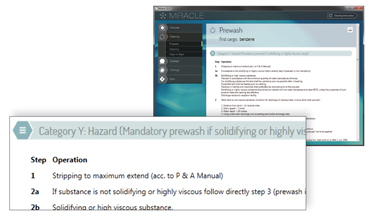 Under the tabulator Prewash the respective prewash information is displayed:
- Prewash instruction for Annex I cargoes
- Prewash instructions for Annex II in the respective category
Prewash Quantity Calculation
Incase of Category X or Category Y potential Solidifying or potential High Viscosity cargoes or Persistent Floaters the Prewash Quantity Calculation will be shown.
Minimum prewash quantity calculation
The minimum prewash quantity calculation requires the following entires:
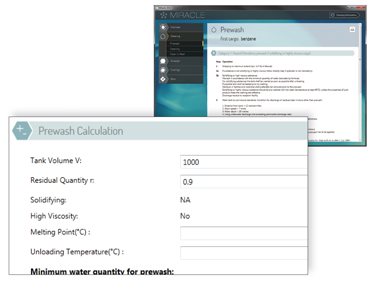
- Tank volume in m3
- Residual quantity as per stripping test documented in the P&A manual
- High viscosity. Enter if viscosity value at unloading temperature exceeds 50 mPas Yes or No. Info should be supplied from shippers of such cargo.
- Solidifying. Enter the melting point from shipping documents and enter the unloading temperature.
IBC specific and operational requirements (column o in chapter 17)
The requirements displayed in column o as paragraphs are displayed as full text under the tabulator IBC in the MIRACLE database.