Troubleshooting
Trouble Shooting
The examples mentioned below are a collection of problems that have been observed.
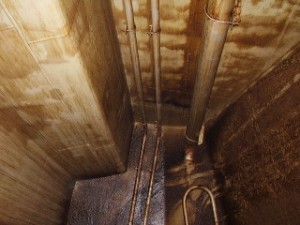
The cleaning suggestions are residues removal proposals that have been applied successfully. Resistance of tank material (coating) and all associated equipment should be carefully reviewed before below mentioned proposals are applied.
-
Residues of crude oil and heavy fuel oil
For removal of residues from crude oil and heavy fuel oil use a solution of 5% KT-Degreaser and butterworth the tank by re-circulation.
The cleaning temperature should be between 70 and 80 °C.
-
White residues after cleaning of or with Caustic Soda Solution
The white powdery residues are carbonates which may be formed due to:
- too hot temperature during cleaning
- high water hardness of the water used during cleaning
These typical white powdery residues can be removed with an acid or acid based cleaner.
Prepare a solution of 2-3 % KT-Metal in freshwater and butterworth the tank by re-circulation. The cleaning temperature should be 50°C.
-
White residues after cleaning of fatty acids or vegetable oils with a high free fatty acid content
The white powdery or sticky residues are calcium and magnesium soaps formed due to:
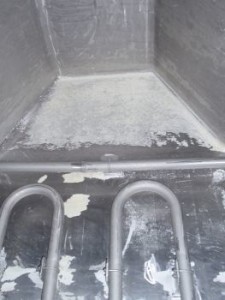
White residues from fatty acid - high water hardness of the water used during cleaning
These typical white powdery or sticky residues can be removed with an acid or acid based cleaner.
Prepare a solution of 2-5% KT-Metal plus 0.4 % CTC-Cleaner-VLC in fresh water and butterworth the tank by re-circulation.
The cleaning temperature should be 50°C.
-
White residues after cleaning of Polyol
These typical white residues can be removed with Methyl Ethyl Ketone or Acetone.
Butterworth the tank with Methyl Ethyl Ketone or Acetone under an inert atmosphere!
-
Inert gas residues
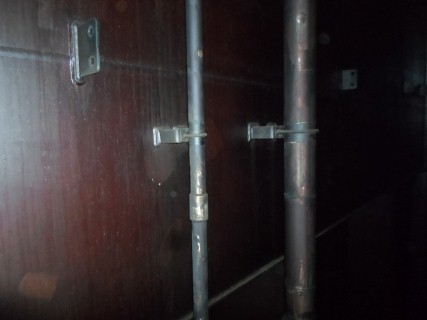
Soot from inertgas Inert gas residues is a general term that refers to impure carbon particles and sulphur compounds (soot) resulting from the incomplete combustion of a hydrocarbon (e.g. gasoil).
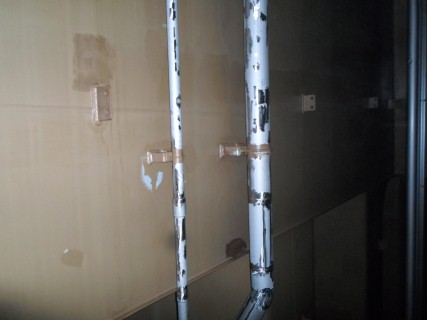
After cleaning with KT-Plus. For removal of this soot use a solution of 5% KT-Plus in fresh water and butterworth the tank by re-circulation.
The cleaning temperature should be 50-60°C.For heavy soot stains use a solution of 5% KT-Plus in combination with 0,6% Potassium Hydroxide in fresh water and butterworth the tank by re-circulation. The cleaning temperature should be 50-60°C
-
Solid residues after cleaning of Crude and Pitch Talloil
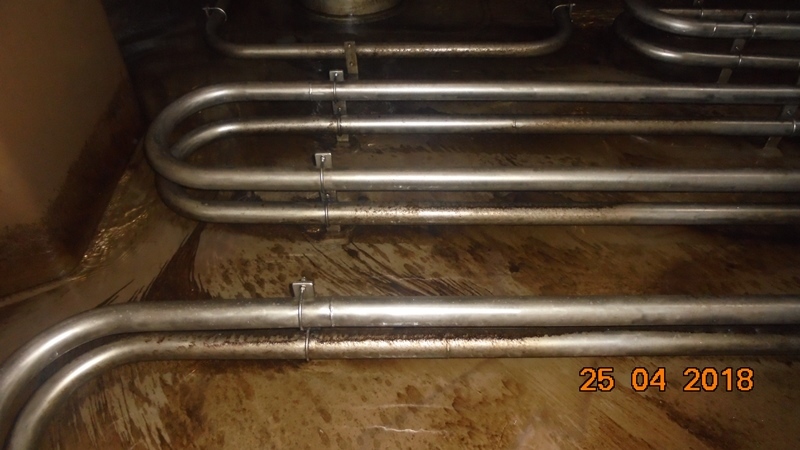
Residues after cleaning of crude talloil 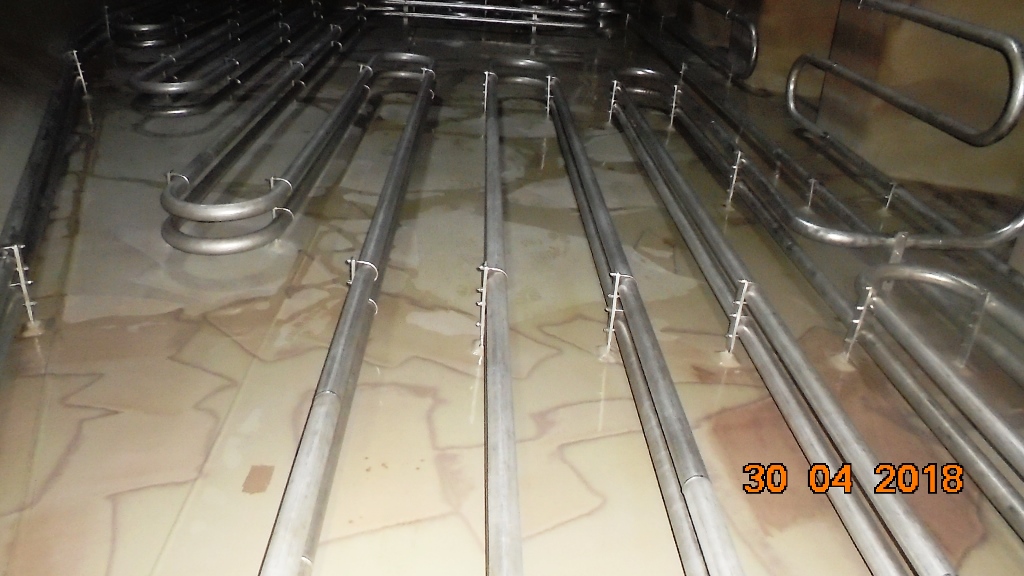
After cleaning with special solution Cleaned with special mixture of KT-Plus, KT-Degreaser and KOH. Contact www.ctc-chemtec.de for detailed instructions.
-
Brownish residues after Crude Benzene
Crude Benzene manufactured by purification and rinsing of coke gas contains impurities like sulphur compounds, carbon, unsaturated and saturated hydrocarbons. After unloading and evaporation it will leave typical brownish residues at the bulkheads.
For removal of this brownish residues use a solution of 5-7% KT-Plus in freshwater and butterworth the tank by re-circulation.
The cleaning temperature should be 50-70°C.
-
High melting point wax residues
After cleaning of certain waxes with hot water there could be possible remainings of high melting point wax residues. Analysis of these wax residues showed partly melting points around/above 100°C thus the removal with hot water was not possible anymore.
For removal of these high melting point, waxes use a solution of 5% KT-Degreaser and butterworth the tank by re-circulation.
The cleaning temperature should be between 80°C.
Tank cleanings conducted showed that a.m. solution was able to remove wax residues even if their melting point was above 100 °C
-
Iron oxide residues on stainless steel surface. (Upgrading of stainless steel surface)
Iron Oxide residues (rust) coming from carbon steel shore tanks and shore lines can be removed with an acid cleaner based on phosphoric acid.
Use a solution of 10% KT-Metal in freshwater and butterworth the tank by re-circulation. The cleaning temperature should be 50°C.
In case of stronger layers and connective corrosion of the stainless steel the tank needs a pickling (mixture of Nitric- and Hydrofluric acid) and passivation (Nitric Acid).
-
Corrosion during Phosphoric Acid transport
Phosphoric acid is produced industrially by two general routes the thermal process and the wet process.
The more expensive thermal process produces a purer product that is used for applications in the food industry.
The wet process dominates in the commercial sector.
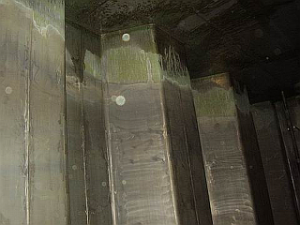
Corrosion from Phosphoric acid The wet process acid contains significant amounts of contaminants such as chlorides, fluorides and sulphates. It is well known that chlorides, fluorides and sulphates are responsible for the aggressiveness of the phosphoric acid. Corrosion occurred on the SS Steel surface in the vapour space (above the liquid level on the picture) during transportation.
In addition it was reported that significant amounts of sediments were present. Damage to pumps and seals due to the abrasive liquid were observed.
Always check max allowed content of this imporities with the stainless steel manufacturer.
For removal of this corrosion products the stainless steel tank needs pickling (a mixture of Nitric- and Hydrofluoric acid) and passivation (Nitric Acid). More details about pickling and passivation.
-
Oxidised and/or dried residues from vegetable or animal oils
some natural oils such as linseed oil or soya bean oil which, when exposed to the air, oxidise to form a tough, elastic film. The oil dries through oxidation, a chemical reaction between the oxygen in the air and the oil, and not through evaporation. This oxidation process creates a remarkably durable and flexible paint film. These oils are therefore used as a binder in paints and varnishes.
If the oxidation process is not fully completed the residues can be removed with a strong alkaline solution (saponification).
Prepare a solution of 5-7% KT-Alka plus 0.4% CTC-Cleaner-VLC in freshwater and butterworth the tank by re-circulation.
The cleaning temperature should be 70-75°C.If the oxidation process is completed and a hard varnish film is present, the removal/solving might be only possible by using a suitable solvent or paint stripper.
-
White residues/film from Calcium or Magnesium Slurry
Residues from calcium carbonate slurry or magnesium hydroxide slurry can be solved by a solution of Nitric Acid in fresh water. Nitric Acid together with Calcium or Magnesium will form the salts Calcium-Nitrate or Magnesium-Nitrate which are both water soluble.
Use a solution of 10% Nitric Acid plus 0.2% CTC-Cleaner-VLC in fresh water and butterworth the tank by re-circulation.
The cleaning temperature should be ambient.
-
Removal of smell
To neutralise the smell of some chemicals (e.g. Acrylate, Nitrobenzene or Pygas) the use of a smell killer/remover may be recommended. Special attention should be given to gaskets in the tank and cleaning hatches. If the next cargo is a sensitive cargo the gaskets should be cleaned or renewed.
A smell killer/remover should preferably be used in combination with an emulsifier. The tanks should be cleaned by recirculation to guarantee that every drop of the smell-producing cargo inside cargo lines, stripping lines, pumps and valve seats is removed.
Butterworth the tank by re-circulation with a solution of 2-3% KT-SMR plus 0.4 % CTC-Cleaner-VLC in freshwater. The cleaning temperature should be 50°C
-
Removal of oxidizing residues (Improving of PTT test)
For removal of these residues and to improve the PTT test prepare the following solution:
2% of a typical delivered 12,5 to 15 % Sodium Hypochlorite solution (Bleach) in freshwater. Which correspond to 200 ltr Bleach for 10.000 ltr of freshwater.
Butterworth the tank with the prepared solution by recirculation. Cleaning temperature should be max. 40 deg. C
-
Removal of Lead
Lead-compounds are completely soluble in Nitric Acid. In the case of stainless steel, Passivation of the tank is an effective method for Lead removal.
For coatings „Lead Clean“ is a suitable cleaner for lead removal. Spray the cleaner undiluted on the bulkhead and let it act for 20 minutes. Thereafter wash the tank with warm water.
-
Brownish Residues after Crude EDC (Ethylene Dichloride)
The residues are mainly Iron Oxides and can be removed by a solution of 10% KT-Metal plus 0.4% CTC Cleaner VLC in fresh water. The cleaning temperature during re-circulation should be 50° C.
-
White residues after Amines
The white residues are carbonates which may be formed due to:
- too hot temperature during cleaning
- high water hardness of the water used during cleaning
These typical white powdery residues can be removed with an acid or acid based cleaner.
Prepare a solution of 2-3 % KT-Metal in fresh water and butterworth the tank by re-circulation. The cleaning temperature should be 50°C.
-
Inhibitor residues TBC - Tertiary Butylcatechol in Styrene on stainless steel and coatings
Butterworth the tank by re-circulation with a solution of 2,5% KT-Solve in freshwater. The cleaning temperature should be 50-60° C.
-
Inhibitor residues MEHQ - Methylhydroquinone in Acrylo Nitrile on stainless steel and coatings
Butterworth the tank by re-circulation with a solution of 2,5% KT-Solve in freshwater. The cleaning temperature should be 50-60° C.
-
Colour residues (dye)
Residues of dye (for example discolouration detected in the methanol wall wash) can be removed by the so-called Dye Out method.
Prepare a solution of 2% of a typical delivered 12,5 to 15 % Sodium Hypochlorite solution (Bleach) in fresh water.
Which correspond to 200 ltr Bleach for 10.000 ltr of fresh water.
Butterworth the tank with the prepared solution by recirculation. Cleaning temperature should be max. 40 deg. C