Saponification
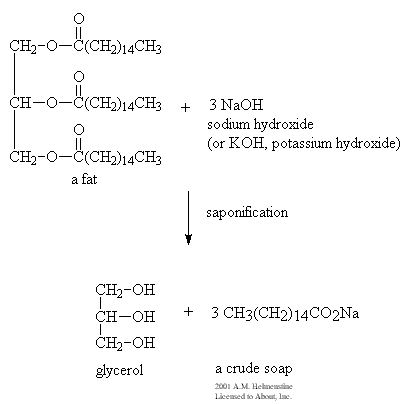
The chemical reaction that produces soap is called saponification. In this reaction, fat or oil reacts with a strong base (sodium hydroxide or potassium hydroxide) to produce glycerin (glycerol) and soap. Fats are large molecules that are considered to be made of four smaller molecules. The smallest of these components is glycerin, an alcohol with three hydroxyl (OH) groups. It is combined with three fatty acids, which may be identical or different molecules. The base attaches to the fat molecule where the component molecules were joined to produce one molecule of glycerin and three molecules of modified fatty acid called soap
-
Reaction of fat with Sodium Hydroxide producing soap
An example of the reaction is:
Saponification