Zinc
Zinc Silicates
Inorganic coatings
Zinc silicate coating is an anti-corrosive paint system that is based on zinc dust (86% wt) with some additives and a binder. The high levels of zinc dust giving zinc-zinc metal contact resulting in cathodic protection similar to those obtained from galvanising. Zinc coatings are inherently porous, which is resulting in a variety of cleaning problems. Zinc coatings have a good resistance against solvents, but are not resistant against acids and bases.
- Not resistant against acids and bases
- Volatile cargoes are desorbed very fast
- Retains non-volatile oil like cargoes
- Adsorbed residues can be solved by wall wash test
- Residues can result in contamination of next or after next cargo
-
Cleaning of Zinc Silicate coated tanks
Follow instructions of coating supplier, especially in regard to ph limitations (acceptable ph value normally between 5,5 and 9,0).
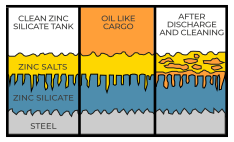
As depicted above the main area of concern is the adsorption of cargo in the pores of the coating. It is believed that the cargo migrates into the pores and capillaries, similar to a fluid adsorption processes.
The cleaning of the coating is similar to the re-generation of an adsorber bed. This is typically performed by heating preferably close to or, if possible above the boiling point of the liquid.
In contrary to Epoxy coatings the desorption takes place relatively fast, provided that the required parameters (temperature and medium to transport the substance) prevail.
-
Volatile and non-volatile liquids
Volatile liquids
Volatility describes how easily a substance will vaporise. Volatile substance has a measurable vapour pressure and a relatively low boiling point. It the temperature is raised, volatility increases. Thus the removal of volatile liquids can be achieved relatively easy by butterworthing with warm to hot water or steaming, depending on the volatility of the liquid.Non-volatile liquids
Non –volatile liquids have a negligible (NIL) vapour pressure at ambient temperature and a high boiling point. Such liquids are extremely difficult to remove, because it could be impossible to heat as much as required to evaporate the liquid (typical example are mineral and vegetable oils). In this case the cargo must be solved in the pores and capillaries. This can be achieved by a solvent wash with Toluene, Methanol or Acetone under inter conditions or with Butylglycolether. (Solvent Wash)
The major difficulty of solving a non-volatile cargo during tank cleaning is the relatively low contact time of the liquid. Usually there is just a liquid film running down the tank walls. The preferred method would be flushing the tank with the solvent, which is normally not feasible. Transporting a cargo with high solvency power, which has a low cleanliness requirement, would be the ideal cure for the coating.