Methods
Butterworth
Spraying of cleaning medium (usually sea or freshwater) onto the tank surface by means of automatic cleaning machine but without the addition of any cleaning agent.
At least one full cycle of the cleaning machine should be allowed for sufficient cleaning. Additional cycles might be necessary depending on the degree of difficulty of the cleaning operation.
-
Injection Cleaning
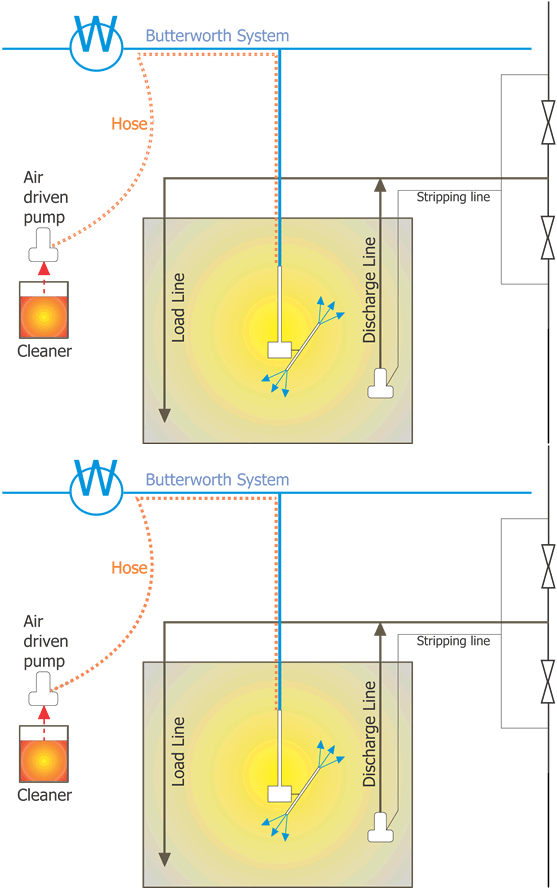
Injection cleaning method Injection of the cleaning agent directly into the butterworth line during butterworthing the tank with seawater. The quantity to be injected depends on the consumption of the cleaning machines and the concentration, which is usually recommended by the supplier of the cleaner.
-
Recirculation Cleaning
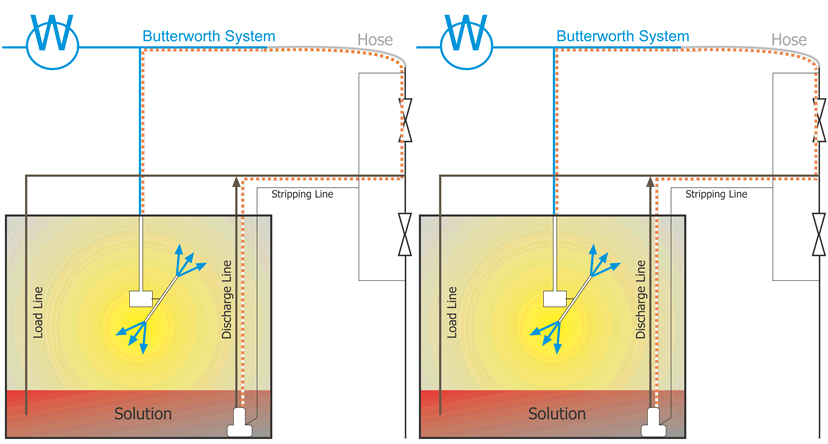
Recirculation cleaning method After a sufficient pre-cleaning, fill 5 – 10 m3 water into the tank to be cleaned and prepare the required solution.
Butterworth the tank by recirculation
The necessary temperature can be achieved/maintained by means of heating coils, cargo heat exchangers or a butterworth heater.
Safety Warning: Static accumulators could generate substantial charges during recirculation cleaning and thus could lead to electrostatic discharge. Before such cargoes are cleaned with recirculation method in an undefined atmosphere all precautions for avoiding electrical charge accumulation have to be applied carefully. For both the tank to be cleaned and especially the service tank a proper risk assessment and management regarding electrostatic discharge and subsequent explosion has to be executed. Typical precautions are LFL measurement and recording before the commencement of and during recirculation cleaning.
-
Recirculation Cleaning via Service Tank
After a sufficient pre-cleaning, fill 20-50m³ of water into the service tank and prepare the required solution. Butterworth the tanks to be cleaned with the solution and pump the water over top back into the service tank.
Heat the solution with the tank heating coils, cargo heater or butterworth heater.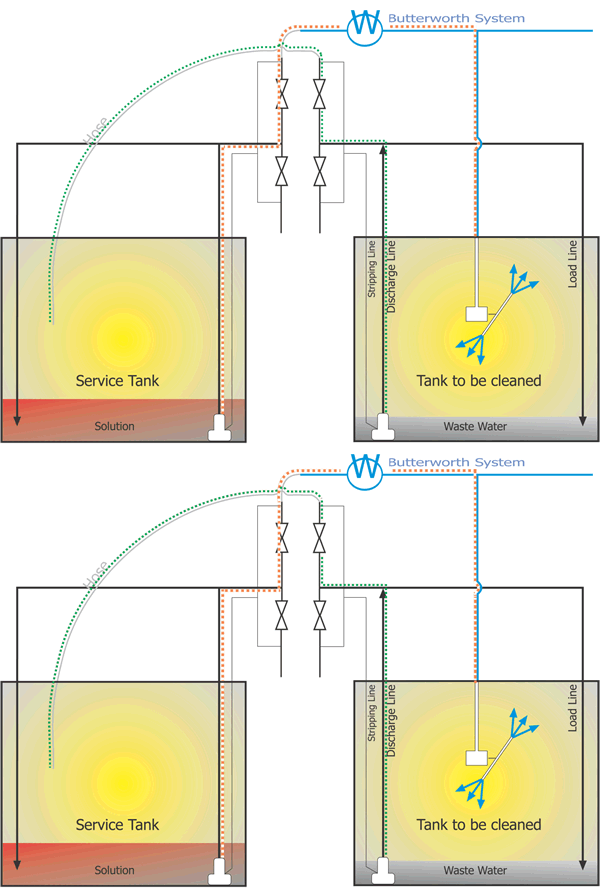
Recirculation via service tank
-
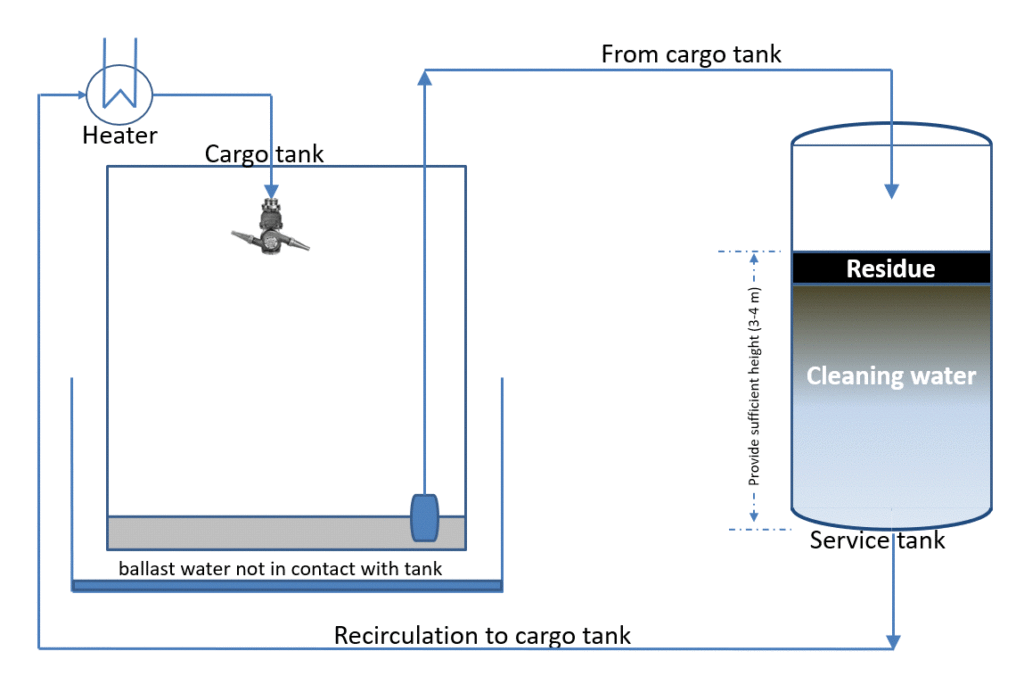
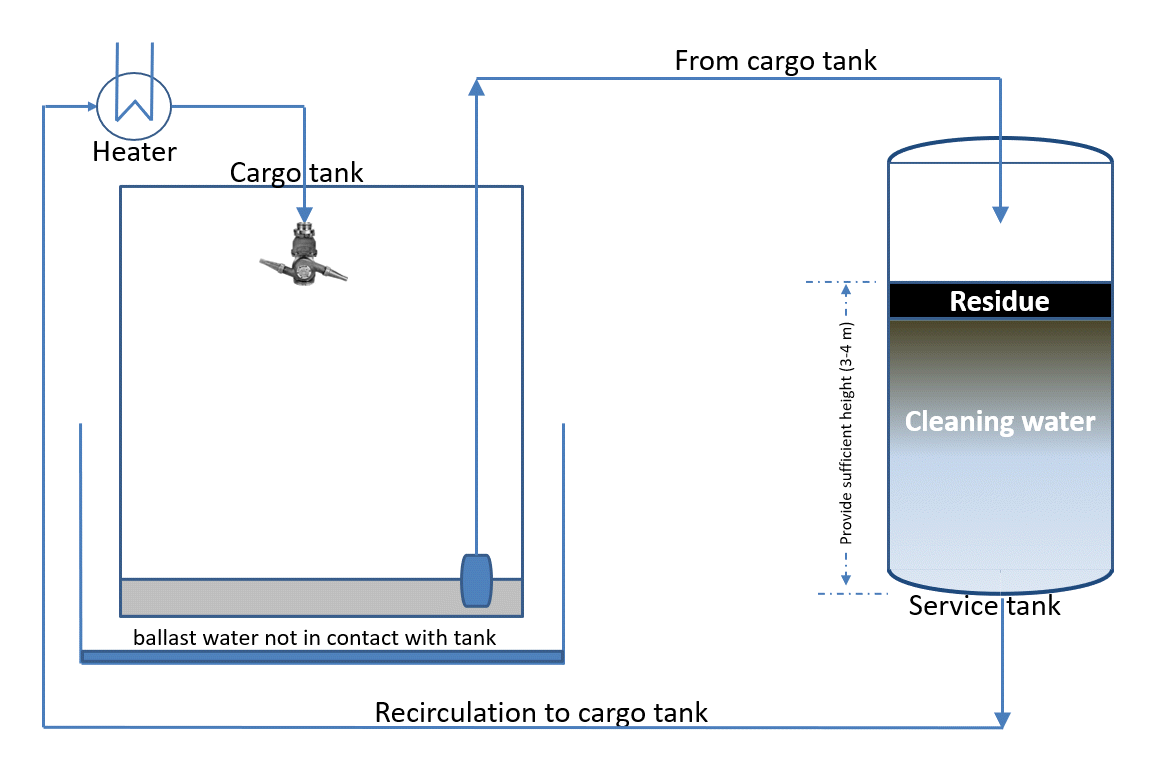
Recirculation/Decanting
Similar to recirculation via service tank. The service tank is used to separate oily residue from the water. The service or decanting tank must be sufficient in dimension in relation to the thruput. Typically applied with low concentrations of detergent (e.g. 3-5% KT-Degreaser). The detergent concentration should be just high enough to emulsify the residues in the cargo tank, but low enough to enable separation of the residues in the separation tank. Thus the amount of emulsified residue in the re-circulation liquid will be very low.
Usually applied on product tankers to clean medium and heavy fuel oils. This method allows to clean several cargo tanks with one solution.
Also applicable for effective cleaning of persistent floaters.
-
Rinsing
Spraying of water (usually fresh water) with cleaning machine onto the tank walls in order to rinse chloride containing water and traces of contamination from the tank surface. Typically it is not necessary to run a full circle of the cleaning machine.
-
Vent/Mop/Dry
Ventilation in order to remove water, moisture and smell. Usually done by forced air circulation. If there are water pools on the tank bottom they should be removed with a mop to reduce drying time. If the next cargo is sensitive to water or moisture, drying must be carried out very carefully.
-
Hand Spraying
The hand spray method requires that the tank is ready for entry into confined space. With this method the cleaning medium is sprayed directly onto tank surfaces. Although the method is very effective, it is time and manpower consuming both in preparation for and execution of the method. The use of flammable and toxic chemicals or additives is strictly forbidden during hand spraying
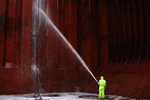
hand spraying
-
Steaming
Steaming means introduction of saturated steam into the tank. The steam will condense on the tank surfaces. The use of steam in a tank is:
To evaporate volatile residues (smell removal)
To reduce the chloride
If it is intended to evaporate residues, it is mostly desired to raise the temperature as high as possible during steaming. This is enhanced, if the adjacent tanks (including ballast tanks) are empty.
If the freshwater has too high chloride levels, the use of steam for removal of chloride is often the only feasible option. Clearly the steam quality depends on the construction of the boiler. If the steam has acceptable low chloride levels, steaming is a good method to reduce chloride levels.
If the steam is used to remove chlorides, the wall temperatures should be cool in contrary to the evaporation method described above. This results in increased condensation and water film running down the tank walls to wash the chlorides off.
-
Solvent Spraying
Direct spray of undiluted solvent onto the tank wall.
A full protective suit and self containing breathing apparatus is mandatory due to the exposure risk.
The use of toxic or flammable chemicals or additives for solvent spraying is strictly forbidden.
The solvents recommended for solvent spraying is:- Butlylglycolether (Butylcellosolve), because of its flashpoint (> 60 deg C)
-
Solvent Wash
Butterworthing (Recirculation) of some 5-10m3 cleaning solution consisting of pure Acetone, Methanol or Toluene for a couple of hours. Inertization down to less than 5% oxygen is mandatory during solvent wash. This method is very effective but requires relatively high solvent quantities.
A more economically but still effective method is solvent wash with diluted Butylglycolether (10 – 20% in water) or undiluted Butylglycolether.
-
Chloride Removal
Removal of Chlorides is typically performed by the following methods
- Steaming
- Washing with Demineralized Water
- Distilled Water
- De-Ionoized Water (DI-Water)
- Demineralized by Micro Filtration
Generally it is a straightforward procedure to wash down chlorides from the tank wall by spraying or recirculation. A prerequisite is that the wash water has a chloride content which is significantly lower than the standard, which is required. It is highly recommended to measure the water with chloride test method before it is used for the chloride wash.
It has been observed that the chloride levels increase with time after the wash. Rates of 1-2 ppm chloride per day have been observed. It is believed that this is caused by tank breathing and subsequent ‘inhalation’ of chloride crystals. Though it is recommended to carry out the chloride wash only shortly before the tank is inspected and subjected to a wall wash test.
If the tank is washed again after chloride increase due to tank breathing the preferred method is recirculation. Salt crystals could be suspended in the tank atmosphere. If in this case the tank is just sprayed these suspended crystals could lead to an increase of the measured chloride concentration.
-
Dye Out
Discoloration of the tank or of the coating could be removed by the so called Dye Out method. It should be considered that the reason for discolouration is difficult to detect. There are different type of molecules which can cause colour. So-called chromophorous groups (the Azo group -N=N- ) are causing the colouration. In case that such an Azo group (contained in Aniline) has caused the colour it could be removed by spraying or recirculation with 1% – 2% of a typically delivered 12.5 -15% Sodium Hypochlorite solution (Bleach). Which correspond to 100-200 ltr Bleach for 10.000 ltr of freshwater.
If this does not work, steaming or solvent steaming could help, because most chromophores are high boiling non-volatile molecules.
-
Crude Oil Washing
Crude Oil Washing (COW) means the removal of deposits from the cargo tanks of an oil tanker using the cargo itself, after the cargo tanks have been emptied.
A crude oil tanker fitted with an inert gas system and approved fixed washing equipment in its cargo tanks can use crude oil from the cargo as the tank washing medium.
The deposits, which would normally remain on board after discharge, are then discharged with the cargo.
This operation could generate several hazards which must be properly eliminated. Reference is made to ISGOTT and other special IMO publications.